Dentistry & Oral Health
Healthy mouths. Comfortable pets. Teeth that last.
Dental health is an important part of your pet’s overall health and quality of life. Dental disease can be painful, and dogs and cats often hide oral discomfort surprisingly well.
At Struggletown Veterinary Hospital, we are passionate about preventative dental care and early intervention. Our goal is to keep your pet’s mouth healthy and pain-free, while helping them retain as many healthy teeth as possible for as long as possible.
Dentistry is something we do every day. All of our veterinarians are experienced in veterinary dentistry, and several have undertaken further training in advanced dental extractions and other dental techniques.
Comprehensive Dental Care
Our dental services range from preventative treatment and routine scale and polishing through to dental radiography, periodontal treatment, surgical extractions and management of more complex dental conditions.
A dental procedure may include:
- A complete examination of the teeth, gums and mouth
- Dental charting and assessment of periodontal health
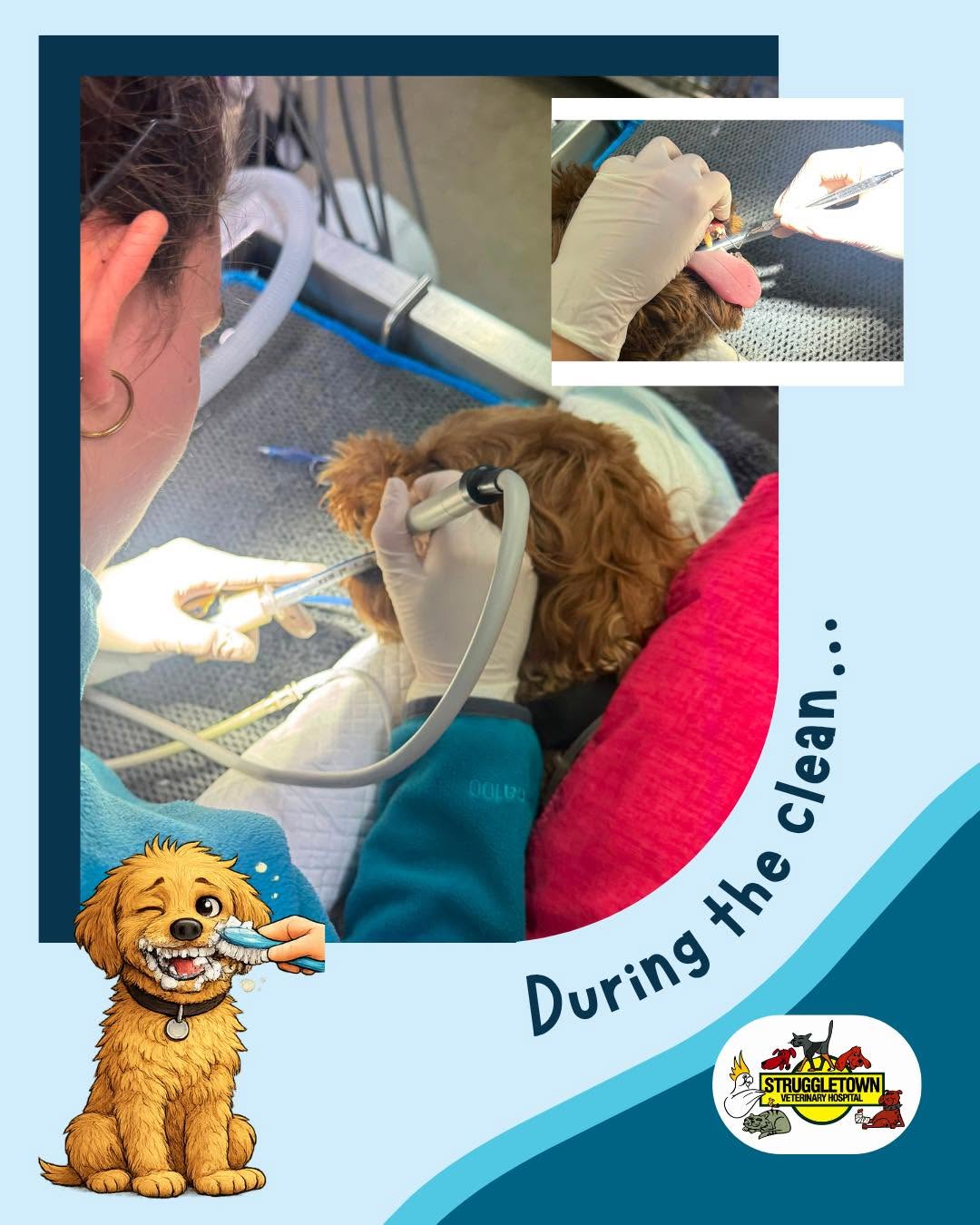
- Ultrasonic scaling above and below the gumline
- Polishing of the teeth
- Digital dental X-rays
- Local anaesthetic nerve blocks and multimodal pain relief
- Simple and surgical tooth extractions when required
- Treatment of selected minor dental defects and cavities
- Development of an ongoing preventative dental-care plan
- Every mouth is different, so treatment is tailored to the individual patient.
A Modern, Fully Equipped Dental Suite
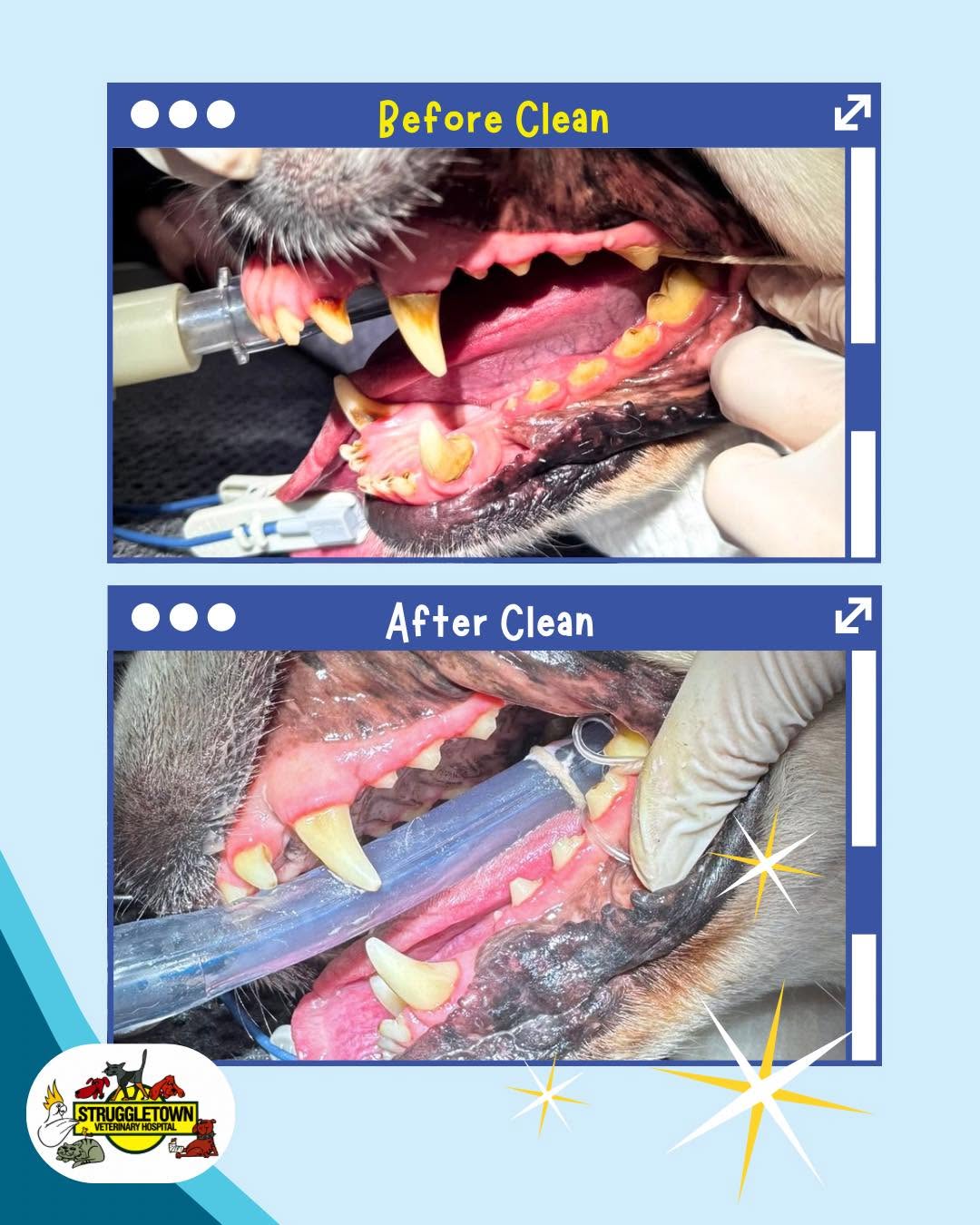
Much of a tooth lies below the gumline, so good veterinary dentistry requires more than simply looking at the visible surface of the teeth.
Our dedicated dental suite is equipped with a new iM3 veterinary dental unit, providing the specialised equipment required for professional cleaning, polishing and oral surgery.
We also use digital dental radiography to assess tooth roots and the surrounding jawbone. Our system incorporates AI-assisted technology as an additional diagnostic support tool to help our veterinarians identify abnormalities and confirm their findings. Final interpretation and treatment decisions always remain with your veterinarian.
For more difficult extractions, we have specialised equipment including the iM3 Vet-Tome, which assists with precise, less traumatic extraction and preservation of the surrounding bone.
We also have equipment and dental materials that allow us to treat and seal selected small defects or cavities where appropriate.
Keeping Teeth Whenever We Can
Our philosophy is not simply to remove teeth.
Where a tooth can remain healthy, comfortable and functional, our preference is to preserve it. However, teeth that are painful, infected or badly diseased can cause ongoing discomfort and are often better removed.
Our experience, dental radiography and specialised equipment allow us to carefully plan both routine and more difficult extractions.
Preventative Dentistry — Our Preferred Approach
The best dental problem is the one we can prevent.
We strongly believe in being proactive about dental health rather than waiting until a pet develops severe periodontal disease, painful teeth or significant infection.
At Struggletown, we generally recommend annual preventative dental treatment as the ideal way to maintain a healthy mouth, in much the same way that people visit their dentist regularly for preventative care. Some pets may benefit from dental treatment more frequently than once a year, while others may require it less often.
There is no single schedule that suits every pet, so we assess the teeth and gums at regular health checks and advise each owner on the most appropriate dental plan for their individual pet.
Preventative dental care may also include tooth brushing, appropriate dental diets, dental chews and other veterinary dental-care products.
Starting preventative care early can help slow the progression of dental disease and may reduce the number of teeth that need to be extracted later in life.
Signs Your Pet May Have Dental Disease
We recommend having your pet’s mouth examined if you notice:
- Bad breath
- Visible tartar or discoloured teeth
- Red, swollen or bleeding gums
- Difficulty chewing or chewing on one side
- Dropping food or eating more slowly
- Pawing or rubbing at the mouth
- Excessive drooling
- Broken, loose or discoloured teeth
- Swelling around the mouth, jaw or face
- Reluctance to eat harder foods
Importantly, a pet that is still eating can still have significant dental pain.
Advanced Dentistry & Referral
We are able to manage the great majority of our patients’ dental care here at Struggletown Veterinary Hospital.
For highly advanced dental or oral conditions, we can arrange referral to Sydney Pet Dentistry when we believe specialist-level treatment or additional expertise is in your pet’s best interests.
A Healthy, Pain-Free Mouth for Life
Dental care is about much more than clean-looking teeth or fresh breath. Maintaining good oral health is also extremely important as part of our pet’s overall health.
Our aim is to prevent dental disease wherever possible, identify problems early, treat painful teeth appropriately and preserve healthy teeth whenever we can.
With regular dental assessment, good preventative care, modern equipment and experienced veterinary treatment, we want to help your pet maintain a comfortable, functional and healthy mouth throughout their life.
Concerned about your pet’s teeth?
Book an appointment with one of our veterinarians for a dental assessment and we can advise you on the best next step for your pet.
Frequently Asked Questions
Leave Blank
Leave the first accordion blank for a Divi glitch
Where should I take my dog for dental treatment in Randwick?
Struggletown Veterinary Hospital provides comprehensive dog and cat dental care in the Randwick area, from preventative dental checks and professional cleaning through to digital dental X-rays, surgical extractions and more complex dental procedures.
All of our veterinarians perform dentistry regularly, and several have completed further training in advanced extractions and dental techniques. For cases requiring highly advanced treatment, we can also arrange referral to Sydney Pet Dentistry.
How do I know if my dog or cat has dental disease?
Common signs include bad breath, tartar, red or bleeding gums, difficulty chewing, dropping food, eating more slowly, excessive drooling, pawing at the mouth, facial swelling or broken and discoloured teeth.
However, pets often hide dental pain very well. A dog or cat can still be eating normally while having significant dental disease, which is why regular dental examinations are so important.
Does my pet need dental X-rays?
Dental X-rays are often an important part of a thorough dental procedure because a large proportion of each tooth lies below the gumline and cannot be assessed by simply looking in the mouth.
They can reveal problems such as root infection, periodontal bone loss, fractured roots and tooth resorption. Dental X-rays also help us plan extractions and confirm that treatment has been completed appropriately.
What happens during a dog or cat dental procedure?
The teeth are scaled above and below the gumline and then polished. Dental X-rays are taken where appropriate to assess the roots and surrounding bone.
If diseased or damaged teeth are identified, these may be treated or extracted where necessary. Local anaesthetic nerve blocks and pain relief are used when required.
Some procedures can be completed in a single anaesthetic. In more complex cases, we may recommend staging treatment over more than one procedure where this is safer for the pet.
Does my pet need an anaesthetic for a dental clean?
This allows us to safely clean below the gumline, examine every tooth properly, take dental X-rays and carry out any required treatment while your pet remains still and comfortable.
An anaesthetic also protects your pet’s airway from water, plaque and debris generated during the dental procedure.
Can a vet remove damaged or diseased teeth?
Yes. Veterinarians are trained to remove teeth that are badly diseased, infected, fractured or painful.
At Struggletown, all of our vets are experienced in dentistry, with several having undertaken further training in advanced dental extractions. We also use digital dental X-rays and specialised equipment such as the iM3 Vet-Tome to assist with more difficult extractions.
Our aim is always to preserve teeth that can remain healthy and comfortable, but removing a painful or diseased tooth can significantly improve a pet’s comfort and quality of life.
Will all of my pet’s dental treatment be completed in one procedure?
Often it can be.
However, if there is extensive dental disease or multiple complicated extractions are required, we may recommend staging treatment over more than one procedure.
This decision is based on what is safest for your pet, taking into account their health, the complexity of the dental work, expected anaesthetic time and recovery. There are times where your vet will recommend staging the procedure to keep anaesthetic times shorter for safety where your pet has other disease processes going on.
Staging can also be used to aid in better financial planning if owners would like to know exactly what the costs are prior to the procedure. An initial staging can be fixed in price, and then a second stage can be estimated much more accurately once we know what extra work is required.
How can I look after my pet's teeth at home?
Home dental care is one of the best ways to slow the progression of dental disease.
Regular tooth brushing is generally the most effective option where your pet will tolerate it. Depending on the individual pet, we may also recommend veterinary dental diets, dental chews or other dental-care products.
Regular veterinary dental checks are equally important, as they allow us to identify problems early and recommend professional cleaning before disease becomes advanced.
What happens if my pet needs very advanced dental treatment?
Most dental procedures can be managed at Struggletown Veterinary Hospital.
If your pet requires particularly complex or highly advanced dental treatment, we can arrange referral to Sydney Pet Dentistry for specialist-level assessment and care.
Get In Touch!
Address:
148 Barker St,
Randwick NSW 2031
Hours:
Mon to Fri: 7:30am - 9:00pm
Sat: 9:00am - 5:00pm
Sun: 9:00am - 1:00pm
Providing Quality Vet Care Near:
Randwick, Coogee, Kingsford, Daceyville, Kensington, Bronte, Waverley, Queens Park, East Gardens, Pagewood, Hillsdale, Maroubra.